Begin with Devoted Church.
Explore devotion to the Word, fellowship, breaking bread, and prayer. Worship flows into teaching, conversation, and practical application.
Explore the teaching →
FOR CHURCHES & PASTORS
A network of pastors and churches committed to discipleship, shared learning, and local training.
Your pastor leads the way. Begin with the Devoted Church series, then work with the Movement to shape an ETS Academy pathway around your pastor’s vision. Participating churches serve as local hosts for agreed discipleship events and training.
Explore joining the Movement →Already working on your church’s growth? Open your workspace →
One connected workspace: Church Health → Pastor Reflection → Church Practices → Leadership Team → Training → 30-day Plan → Review.
FOR PASTORS & HOST CHURCHES
The pastor must complete the Devoted Church series before the church joins the Movement. The pastor’s participation is the requirement; congregation-wide completion is not required for membership.
Explore devotion to the Word, fellowship, breaking bread, and prayer. Worship flows into teaching, conversation, and practical application.
Explore the teaching →Discuss your pastor’s vision, complete the series, and review shared beliefs, standards, and participation expectations together before membership is confirmed.
Read what we believe →Your church becomes a local place for agreed discipleship gatherings and training. Dates, space, local responsibilities, and any event expenses are discussed before an event is confirmed.
THE 4-PHASE SHIFT ARCHITECTURE
Transitioning a congregation from an attractional destination model to an equipping movement requires shifting the culture from attendance to deployment. This is not an overnight program swap; it is a structural redesign of how leadership measures success, trains believers, and allocates capital.
A planning roadmap for local leadership. Adapt the pace and budget targets to your church’s needs, responsibilities, and readiness.
Download the roadmap & action checklist (PDF) →Before changing programs, leadership must change the language and the scoreboard. If success is still measured strictly by Sunday headcounts and plate totals, consumer behavior will persist.
Replace the ‘3 Bs’ (Buildings, Budgets, Bodies in seats) with Sending Metrics:
Old Metric: ‘How many people came to the Sunday service?’ New Metric: ‘How many believers were activated in their spiritual gifts this week?’
Old Metric: ‘How big is our internal ministry team?’ New Metric: ‘How many disciples are reproducing discipling relationships outside the building?’
Shift Sunday morning announcements and sermon applications from ‘Come, bring, consume, and volunteer for our event’ to ‘Go, build, serve, and exercise your kingdom authority where you live and work.’
Conduct the 6-dimension diagnostic with the leadership team, elder board, and staff to build consensus around the current gap between institutional maintenance and biblical movement.
An attractional system burns heavy energy, labor, and capital keeping high-production weekend programs running. Equipping requires freeing up bandwidth and capital.
Transition staff job descriptions from Doers of Ministry (e.g., visitation, executing events, running programs) to Equippers of the Saints (Ephesians 4:11–12). A staff pastor’s primary role becomes training 5 to 10 leaders who carry out the work.
Eliminate or consolidate low-impact internal events that consume volunteer energy without producing disciple-makers. If an event only keeps members busy inside the building, put it on pause.
Adjust the church budget target: systematically reduce the percentage allocated to internal entertainment/production overhead and reallocate resources directly into community empowerment, leadership training, and micro-mission initiatives.
Replace passive seating arrangements with actionable, gift-based activation pipelines.
Use the Fivefold Leadership Workshop below →
Use Five-Fold ministry profiling (Apostolic, Prophetic, Evangelistic, Pastoral, Teaching) to help every member discover their structural wiring rather than assigning them to generic volunteer roles (e.g., parking lot duty or nursery sign-in).
Attractional Small Group: Curriculum-based discussion circle centered on personal comfort and fellowship.
Ekklesia Huddle: Action-oriented cohort focused on spiritual accountability, gift development, and local neighborhood/workplace engagement.
Establish short-term cohorts (6 to 8 weeks) designed to help believers design impact initiatives—such as community outreach projects, workplace Bible studies, or neighborhood support systems—and launch them directly into their sphere of influence.
Once the culture shifts from consumption to activation, victory is defined by sending capacity rather than retention capacity.
Empower trained leaders to host decentralized home gatherings, workplace prayer cells, and community micro-churches with full authorization to administer community, accountability, and ministry.
Regularly commission and lay hands on believers during main gatherings—not just for full-time vocational missionaries, but for teachers, business owners, healthcare workers, and community organizers stepping into their daily mission fields.
Audit local community metrics (e.g., local needs met, families served, leaders raised up from within) to verify that the assembly is salt and light in its actual geographic footprint.
Immediate milestones for the first 90 days.
| Focus Area | Immediate Milestone (First 90 Days) | Target Outcome |
|---|---|---|
| Leadership | Rewrite staff job descriptions around Ephesians 4:11–12 equipping. | Staff measured by leaders activated, not events executed. |
| Finance | Audit budget for internal production vs. external kingdom investment. | Shift 10–20% of operational budget toward equipping and outreach. |
| Culture | Replace Sunday consumer announcements with testimonies of lay activation. | Congregation views their daily job/neighborhood as their primary altar. |
| Discipleship | Launch APEST gift discovery process across leadership and core groups. | Every active participant knows their functional spiritual wiring. |
PHASE 3 RESOURCE · OPTIONAL LEADERSHIP WORKSHOP
Move from theoretical knowledge to practical role alignment. Explore primary and secondary functional preferences, discuss team balance, and align leadership with the equipping posture of Ephesians 4:11–12.
This is guided reflection, not a validated assessment, ministry title, or declaration of calling. Test your impressions against examples of service, feedback from others, and demonstrated growth. Results do not determine Academy placement or completion.
Download the workshop & reflection worksheets (PDF) →
| Archetype | Primary focus | Core question | Potential blind spot |
|---|---|---|---|
| Apostolic (Pioneer / Builder) | Expansion, system architecture, pioneering ground, strategic alignment. | Are we building to multiply and break new ground? | Can move too fast, steamroll people, or discard systems before they mature. |
| Prophetic (Discerner / Aligner) | Covenant fidelity, spiritual alignment, truth, standing for justice/integrity. | Are we aligned with God’s heart, truth, and holy standards? | Can become overly critical, impatient with process, or isolated. |
| Evangelistic (Recruiter / Mobilizer) | Storytelling, outward bridge-building, mobilizing people to the movement. | Are we engaging the unchurched and sharing the vision effectively? | Can focus on crowd generation without building long-term discipleship depth. |
| Pastoral / Shepherd (Protector / Nurturer) | Community health, care systems, relational wholeness, safety, connection. | Are the people healthy, known, cared for, and spiritually safe? | Can prioritize comfort over necessary growth, risk, or structural pruning. |
| Teaching (Instructor / Grounder) | Biblical literacy, truth structure, systematic understanding, wisdom. | Is this grounded in scripture, accurate, and structurally sound? | Can emphasize information acquisition over practical activation and obedience. |
FOR INDIVIDUALS · OPTIONAL REFLECTION
Complete this independently before the team workshop, or use it for your own reflection. Building, discerning, sharing faith, caring, and teaching are ways to contribute throughout Learner → Participator → Multiplier.
Rank each description once, from 1 (most natural) to 5 (least natural), based on your response to a brand-new strategic initiative. Use every rank once. Your first two choices are starting points for discussion, not fixed labels.
Use the PDF worksheet or your own notebook. This page does not collect or save responses.
Energy Flow: What tasks or leadership responsibilities energize you most during the week? Which ones drain you fastest?
Frustration Driver: What gap in a project frustrates you first? (e.g., lack of strategy [A], lack of spiritual depth [P], lack of outreach [E], lack of care [S], lack of clarity/accuracy [T]).
Equipping Orientation: If you had to equip 5 people to step into your shoes, what core competency would you instinctually focus on training them to master?
Name a real example of service that supports your first two choices. Ask someone who knows your service well what they observe. Choose one practical action to help another person grow.
| Time | Activity |
|---|---|
| 00:00–00:15 | Framework Orientation & Scripture Alignment (Ephesians 4:11–12) |
| 00:15–00:45 | Individual Mapping & Pair Share (Primary/Secondary Roles) |
| 00:45–01:15 | Team Heatmap & Gap Analysis |
| 01:15–01:30 | Equipping Commitments & Role Re-alignment |
Draw five columns: A - P - E - S - T. Each leader places a green marker for their primary preference and an orange marker for their secondary preference. Label every marker “Primary” or “Secondary” as well, so color is not the only distinction. Invite examples and feedback before interpreting the pattern.
Dominant Clusters: Where is our leadership team heaviest? What strengths have we actually seen in practice, and which perspectives need more attention? A Shepherd/Teacher-heavy pattern can prompt discussion about care, depth, pioneering, and outreach; the pattern alone does not establish strengths or limitations.
Functional Gaps: Which functions are underrepresented or missing entirely? Who is stepping up to cover those missing perspectives, and is that causing burnout?
Friction Points: Where do our natural tensions lie? (e.g., Apostles pushing rapid risk vs. Teachers/Shepherds requesting stability and care).
Use the final 15 minutes to identify one responsibility to share, one person to equip, and a date to review progress together.
| Archetype | Traditional execution role | Equipping mandate |
|---|---|---|
| Apostolic | Managing day-to-day operations and running internal meetings. | Architecting leadership pipelines, planting new micro-gatherings, and launching teams. |
| Prophetic | Doing all prayer leadership and calling out problems in isolation. | Training intercessory teams, fostering culture-wide discernment, and leading spiritual audits. |
| Evangelistic | Running all outreach events and preaching salvation sermons. | Training every believer to articulate their faith and build relational bridges in their workplace. |
| Pastoral | Performing all hospital visits, personal counseling, and member care. | Training micro-group leaders and care teams to shepherd, counsel, and care for one another. |
| Teaching | Delivering all Sunday lectures and writing all small group curriculum. | Training lay teachers, establishing catechism pathways, and building self-directed study tools. |
TWO WAYS TO BEGIN
The pastor participates in either format. We agree on dates together; an inquiry does not reserve a training date.
Bring Devoted Church into your regular Bible study over an agreed schedule. Make room for worship, teaching, discussion, and putting the four pillars into practice.
Thursday evening, Friday evening, and two Saturday sessions with a break between them. Each session lasts 60–90 minutes, including praise and worship followed by teaching.
Four sessions, one for each pillar: the Word, fellowship, breaking bread, and prayer. The final schedule is confirmed with your church.
INCLUDED WITH PARTICIPATION
A straightforward website introducing your church, pastor, service times, location, and contact details, linked from the Movement website after onboarding. This is prepared with your church; applying does not generate or publish a website automatically.
Academy resources and an agreed learning pathway shaped around your pastor’s vision, using the Movement’s shared discipleship foundation.
Training resources for participating pastors, connection with the network, and access to member discounts and defined ministry perks.
No Movement membership or Academy fee. The simple website and agreed Academy pathway are included. Equipment, additional technology services, custom automations, and expanded support are optional paid services. Domain, hosting, update arrangements, and the scope of included work are clarified before setup. Specific package prices and discounts are confirmed in writing.
START WITH A CONVERSATION
Tell us about your pastor’s vision and the training format that fits. We will review your request and discuss the next step.
Sign in and create your learning profile before submitting. Your request is visible to the authorized Movement leader. Follow the response in My Growth Track → My requests. This does not enroll your church, verify course completion, or book an event.
CHURCH HEALTH · THE BIG PICTURE
Begin with 18 statements across six areas: spiritual formation, relationships and care, leadership health, mission and outreach, member participation, and ministry sustainability.
Receive a scored reflection and a practical development plan. Attendance and giving can provide context; they do not define a healthy church.
Take the Church Health Assessment →Invite different perspectives into the conversation. This first version produces a private, individual report; it does not collect anonymous surveys or automatically combine church-wide results.
THE DEVELOPMENT FRAMEWORK
Knowing what someone believes is a beginning. We also want to understand how that belief takes shape in daily life.
Who are we becoming?
Integrity, humility, love, accountability, and a willingness to receive correction.
Discuss: Do my private choices reflect the faith I express publicly?
What can we put into practice?
Understanding Scripture, explaining the gospel, using our gifts, and helping another person grow.
Discuss: Can I explain what I am learning and demonstrate it in everyday life?
What do we keep showing up for?
Following through, building sustainable spiritual habits, and serving beyond the first burst of enthusiasm.
Discuss: What practices are becoming a dependable part of my life?
FROM REFLECTION TO READINESS
Use these questions in a conversation with members and emerging leaders. Listen for examples, opportunities, and the support each person needs.
Faithful: Do I honor my commitments?
Available: What can I realistically commit to in this season?
Teachable: How do I respond to feedback and put it into practice?
Time: Where do I make room for God and others?
Talents: How am I using and developing my gifts?
Treasure: How do I practice generosity with the resources entrusted to me?
Consider each person’s circumstances and capacity. Generosity is not ranked by dollar amount, and limited availability is not a verdict on someone’s faith.
GO DEEPER AFTER CHURCH HEALTH
These tools are available now. Choose the one that matches the conversation you want to begin.
Reflect on your own leadership using 27 statements, clear scoring criteria, evidence notes, and a practical development plan.
Review the shared practices and systems that support discipleship, service, and responsible stewardship across your congregation.
Discuss how your team works together, develops people, and follows through. Record evidence and agree on a next step.
Your results belong to you. Complete a rubric assessment, save its report and development plan to My Growth Track, and choose what to share in a review request to Reno. You can also keep a PDF. Anonymous member surveys and combined church reports are not available.
For an individual member’s learning pathway, use the free Growth Profile. Follow it with a course in ETS Academy.
FROM OUR MINISTRY HISTORY
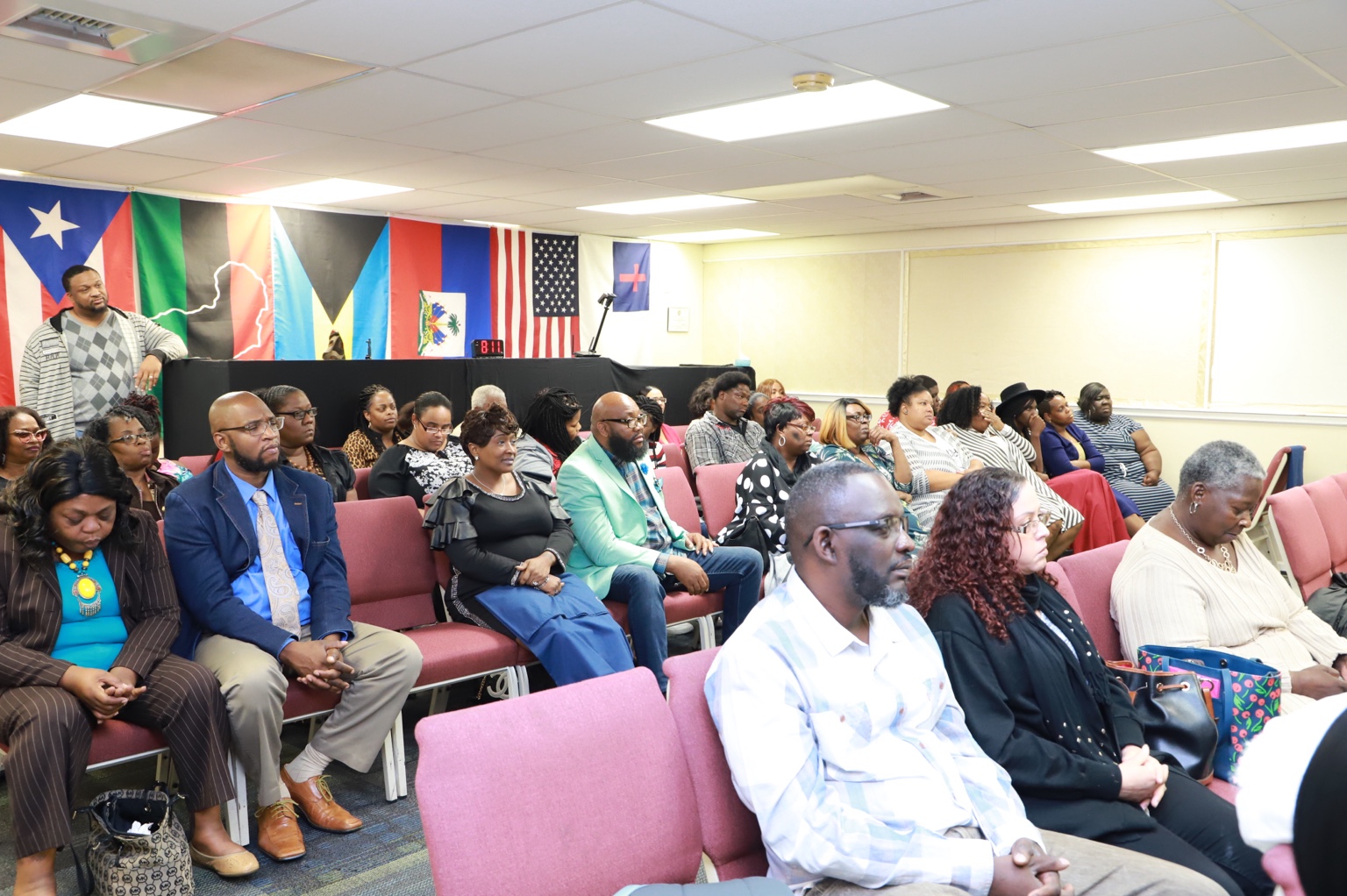
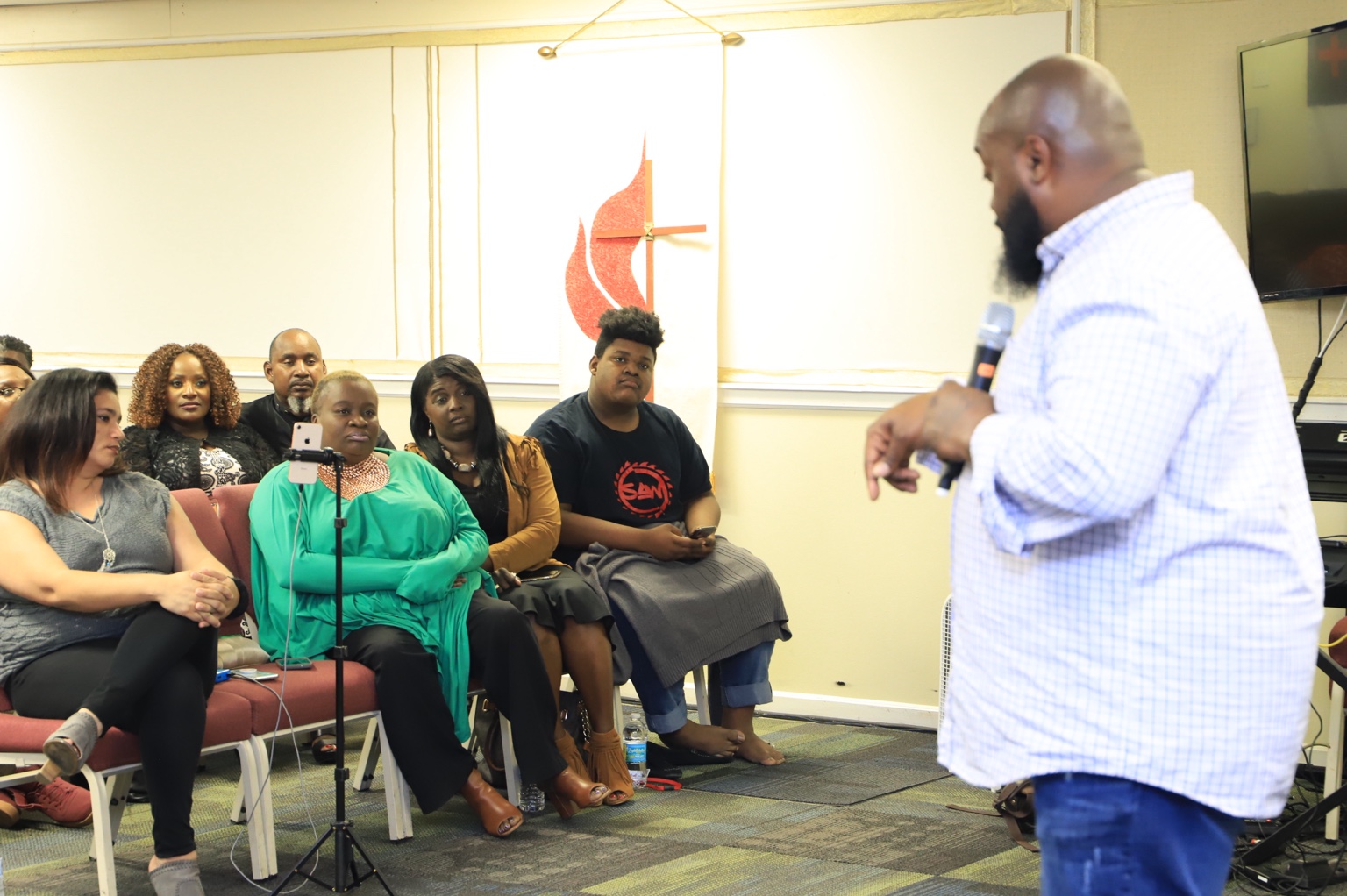
Create space for people to learn, ask questions, and practice what they are learning. These past ministry moments reflect the relational approach behind our work.